
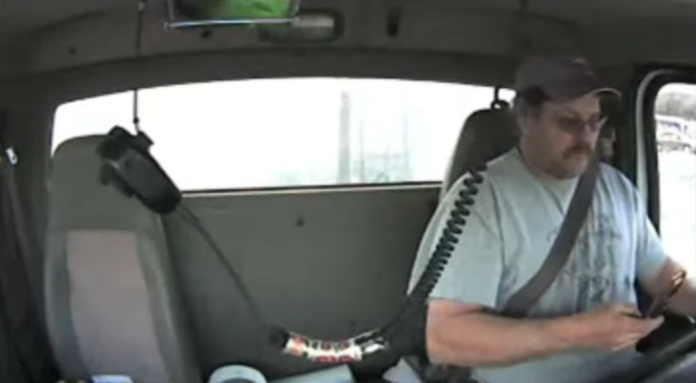
April is Distracted Driving Awareness Month — a timely reminder for commercial motor vehicle drivers that distraction behind the wheel carries consequences far beyond a typical passenger vehicle accident.
According to the Federal Motor Carrier Safety Administration, a 2009 study found that 71% of large-truck crashes occurred because the driver was doing something other than driving. In 2024, distracted driving contributed to more than 3,200 motor vehicle fatalities nationwide.
Driver distraction is defined as any diversion of attention away from activities critical to safe driving. Distractions can come from inside the cab — texting, dialing, eating, adjusting the radio, using a dispatching device — or from outside, such as billboards, buildings, or people. The FMCSA offers the following guidance for commercial drivers.
Don’t Let Outside Objects Pull Your Attention
Anything taking your eyes away from the road is a distraction. A 2006 study found that driver inattention was the leading factor in crashes and near-crashes, with nearly 80% of crashes involving some form of inattention in the three seconds before impact. A separate three-year FMCSA and NHTSA data collection effort estimated that 11,000 truck crashes involved distractions external to the cab.
No Texting While Driving
Texting while driving is illegal for CMV drivers. A 2009 study found that text messaging while driving increased a driver’s chances of being involved in a safety-critical event by 23 times. Drivers who were texting spent nearly five seconds looking at their phone in the moments before a critical event. At 55 mph, five seconds of inattention means traveling the length of a football field without looking at the road. That study was so significant it prompted FMCSA to ban texting for commercial drivers and led President Obama to issue Executive Order 13513 banning federal employees from texting while driving on government business.
No Dispatching Devices While Driving
Using a dispatching device while driving — sometimes called a mobile or portable data terminal — increases a driver’s chances of a safety-critical event by nine times, according to a 2009 study. Many companies lock out these devices when the truck is moving. Some newer devices can read messages aloud and accept voice responses to reduce the need to look at a screen.
No Dialing a Handheld Phone While Driving
Dialing a handheld phone while driving is illegal for CMV drivers and increases crash risk by three times, according to a 2010 study. A 2011 study also found that drivers dialing a handheld phone made more frequent and larger steering corrections than those simply talking. If a call is necessary, pull over safely, keep it short, or use a voice-activated hands-free system.
No Reading, Writing, or Using Paper Maps While Driving
Reading while driving increases the risk of a safety-critical event by seven times. Writing while driving increases it by eight times, according to a 2009 study. If directions or notes are needed, pull off the road. GPS units are safer than paper maps but should never be programmed while moving. Many newer units accept voice input to eliminate the need to look away from the road.
Avoid Eating and Drinking While Driving
Eating behind the wheel takes at least one hand off the wheel and can take eyes off the road. Research has found that eating while driving is riskier than talking on a cell phone. In May 2008, a CMV driver distracted by drinking a soda struck a stopped school bus that was letting children off on Highway 50 in Kenosha County, Wisconsin. Fourteen children went to the hospital, four with serious injuries. The driver was hospitalized in critical condition.
FMCSA urges drivers to eat before getting behind the wheel or to pull over when it is time to eat or drink.
📸 Image(s) used under fair use for news reporting.
